
EHA - Engineering for Humanitarian Action
.png)
The Engineering for Humanitarian Action (EHA) initiative was launched in 2020 by the ICRS, ETH Zürich and EPFL to harness the scientific and technological expertise of Switzerland’s two federal institutes of technology to support humanitarian action.
The EHA initiative develops, tests and scales innovations that help address the most pressing humanitarian challenges and creates educational programs for humanitarian workers.
Under the EHA umbrella, several projects were developed as well as educational material with the MOOCs, the 2nd one being currently in production. More details on the MOOC can be found on our Education page.
Find out more about all the past and current projects in the right-hand side of this page and browse this page to the end to read our news and reports
More on this programme on the EHA official page.
Credits Main Image: ICRC2018MamadouDiawoyeDia
Former Project/Programme Managers: Grégoire Castella
.png)
.png)
.png)
.png)
.png)
.png)
.png)
.png)
.png)
.png)


Dr. EmelineDarçot is a project manager at the EssentialTech Centre in Lausanne, Switzerland, which harnesses innovation in support of sustainable development,humanitarian action and peace promotion. She is currently coordinating the Engineering Humanitarian Action programme within the Humanitarian Division.
She holds a PhD in Life Science from the University of Lausanne (Switzerland). After a PhD and a postdoctoral position in biomedical imaging at the University Hospital of Lausanne (CHUV), Emeline joined the EPFL EssentialTech Centre in 2021 as a project coordinator on the Ren’All Care project. She then joined the EPFL Research Office in 2022 as project manager and coordinates since then the Engineering Humanitarian Action programme within the Humanitarian Division of the EssentialTech Centre.
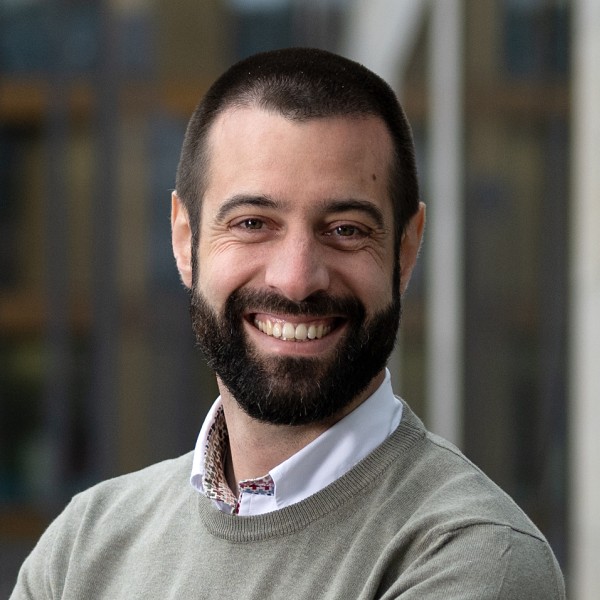
Christian Lenz joined the Centre as Head of Humanitarian Action Division in January 2026, where he steers applied research, partnerships, and programmes at the interface of engineering and humanitarian action. He is a mechanical engineer trained at ETH Zurich and holds an Executive MBA from Politecnico di Milano. He brings nine years of experience from the International Committee of the Red Cross, where he held senior operational and strategic roles spanning field coordination, regional engineering portfolios, and institutional innovation.
Before joining the ICRC, Christian co-founded early-stage ventures and led technology development from research to market. This experience continues to inform his focus on execution, scalability, and the practical constraints of innovation beyond the laboratory.
More recently, he has been advancing his practice through studies in designing resilient regenerative systems. His work increasingly emphasises place-based approaches, long-term resilience, and responsible innovation that links humanitarian response, evelopment, and ecological regeneration.


Integrated Settlement Planning